


The mathematics component of the Gifted Education Programme screening confuses many capable students, and the reason is instructive. It does not test whether a child has covered more syllabus than their peers. It tests whether they can approach an unfamiliar problem with no taught method available, notice structure, and reason toward an answer. GEP maths tuition that recognises this difference looks quite unlike ordinary maths coaching.
Speed and Accuracy Are Not the Point
Children who are strong at school mathematics are often fast and accurate at procedures they have been taught. The screening paper deliberately presents problems where no procedure applies. A student whose entire experience is executing taught methods will look for the method, fail to find it, and stall. A student accustomed to problems without an obvious route will start experimenting trying small cases, drawing a diagram, looking for a pattern. That second habit is what preparation should build.
Number Sense as a Foundation
Underneath everything sits comfort with numbers themselves: recognising that a total looks wrong before checking, seeing factor relationships, estimating sensibly, understanding place value deeply enough to manipulate it flexibly. Children with strong number sense spot structure in problems that others have to grind through. This develops through varied exposure and mental arithmetic rather than through worksheets of similar questions, and it takes months rather than weeks to build.
Pattern Recognition and Reasoning
Many screening questions reduce to noticing a pattern and expressing it. Practising this means working with sequences, spatial arrangements, logical deduction puzzles and problems where the answer emerges from careful observation. The important part is the child articulating what they noticed and why it holds, rather than simply arriving at a correct answer. A child who can explain a pattern can extend it; a child who guessed correctly cannot.
Productive Struggle
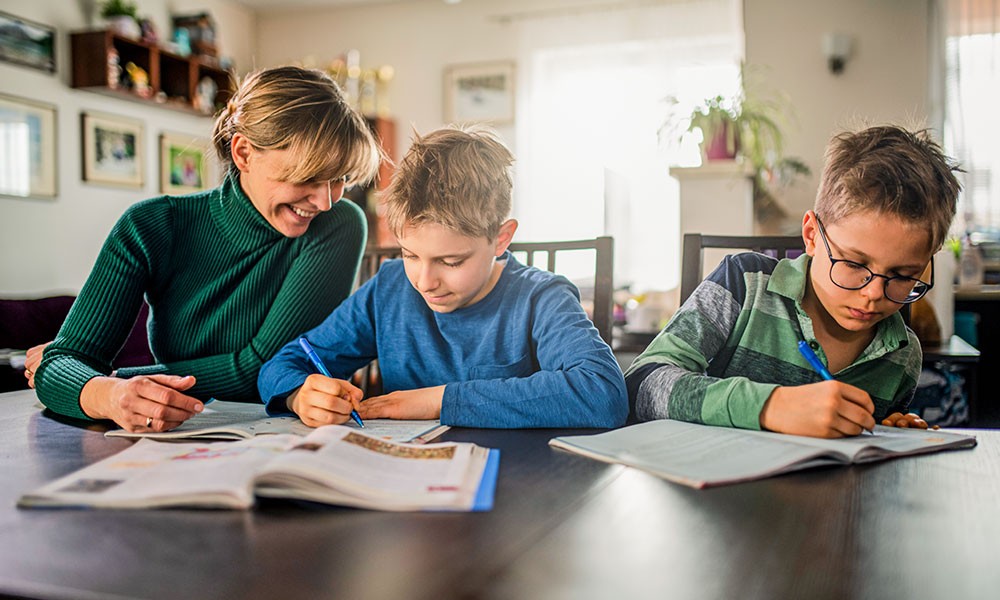
The most useful thing a parent or tutor can do is resist explaining too early. A child who sits with a difficult problem for ten minutes, tries three approaches and fails, then gets a small hint, learns considerably more than one who receives the method after ninety seconds. This is uncomfortable to watch and it is where genuine problem-solving capability develops. Programmes built around GEP English preparation and mathematics together tend to share this philosophy, since both papers reward reasoning under unfamiliarity rather than recall.
Useful Techniques to Teach Explicitly
A small toolkit helps. Draw a diagram or model. Try a simpler version of the problem first. Work backwards from the answer. Look for what stays constant. Make an organised list rather than a random one. Check whether the answer is plausible in size. These are general strategies rather than topic methods, and teaching them explicitly gives a child something to reach for when nothing obvious presents itself, which is precisely the situation the paper creates.
Managing Time in the Paper
Timing costs marks for capable students who become absorbed in one difficult question. Practising with a clock helps, but the skill being taught is triage recognising quickly whether a problem is likely to yield, banking the achievable marks first, and returning to hard items with the remaining time. This should be introduced only once the underlying reasoning is developing, since imposing time pressure too early produces anxiety that suppresses exactly the careful thinking required.
Keeping It Proportionate
This is one screening exercise taken at nine years old, and most children will not qualify. That outcome carries very little information about a child’s mathematical ability or future. A household where the preparation becomes a source of anxiety usually gets a worse result as well as a worse year. Framing the work as interesting problems to explore, rather than as a decisive examination, protects both the child’s relationship with mathematics and, incidentally, their performance.
When Outside Help Makes Sense
Many families manage well independently with good problem sets and patience. External support helps most when a child is capable but has only ever met routine questions, when a parent finds it difficult to hold back from explaining, or when suitable material is hard to source. What to look for is small groups where a teacher can hear individual reasoning, problems that genuinely require thought rather than repetition, and honest assessment of readiness. Providers offering GEP tuition differ considerably in approach, so asking how a typical session runs is more informative than reading a syllabus outline.
The Lasting Benefit
Whatever the screening result, a child who has learned to sit with a hard problem, try several approaches and reason toward an answer has gained something that serves them through secondary mathematics and well beyond it. That capability is the actual objective. The programme place, if it comes, is a by-product and treating it that way tends to produce better outcomes on both counts.
One practical note for parents doing this at home. Resist correcting arithmetic slips immediately when the reasoning is sound, and resist accepting a right answer when the reasoning is not. The habit you are trying to build is thinking clearly about structure, and a child who learns that only the final number matters will optimise for guessing rather than for understanding. Ask how they got there before you look at what they wrote.



Leave a Comment