
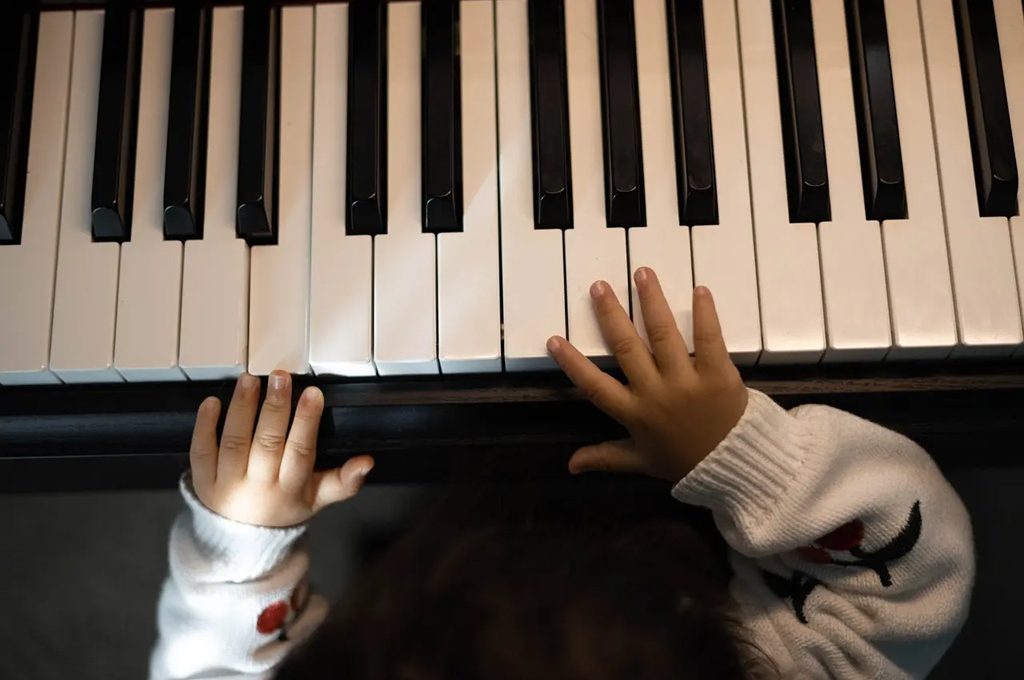

Piano lessons for kids represent one of the most rewarding educational investments a parent can make, and in Singapore, the options available to young learners have never been more thoughtfully designed or widely accessible. From toddler music programmes that introduce rhythm and melody through play, to structured grade examinations for older children, the piano remains the foundational instrument of choice for families across the island. The reasons are well documented, and the evidence is compelling.
Why the Piano Remains the Instrument of Choice
There is a reason music educators consistently recommend the piano as the ideal first instrument. Its layout is logical and visual in a way that most instruments simply are not. A child can see the notes laid out in a clear, repeating sequence, which makes understanding pitch, intervals, and scales considerably more intuitive than on a string or wind instrument.
Beyond the mechanics, research consistently shows that early keyboard training strengthens a child’s ability to process language, perform mathematical reasoning, and sustain focused attention. These are not peripheral benefits. As one Singapore-based music educator noted:
“Children who learn the piano from a young age tend to develop stronger working memory and self-discipline. These skills carry them well beyond the music room.”
The piano, in other words, teaches far more than music.
An Age Guide: When Should Your Child Start?
One of the most common questions parents ask is when to begin. The honest answer is that it depends on the child, but general patterns do emerge from the experience of educators working in children’s piano education across Singapore.
Ages 3 to 5
At this stage, structured lessons are less important than musical exposure. Short, playful sessions focused on listening, clapping rhythms, and exploring the keyboard freely build the foundational love of music that sustains long-term learning. Formal notation is not yet appropriate.
Ages 5 to 7
This is often the sweet spot for beginning formal piano lessons for kids. Children at this age can follow simple instructions, recognise patterns, and manage the hand-eye coordination required for basic pieces. Short lessons of twenty to thirty minutes work best.
Ages 7 to 10
By this stage, children can begin working towards formal examinations such as ABRSM or Trinity grades. Attention spans are longer, reading skills support music literacy, and the emotional connection to music deepens meaningfully.
Ages 10 and above
Older beginners should never feel discouraged. Children who begin at ten or eleven often progress quickly because their cognitive development supports faster understanding of music theory and technique.
The most important factor at every age is that the child feels genuinely curious rather than coerced. A child who wants to be at the piano will always outpace one who has been placed there against their wishes.
Learning Approaches: Finding the Right Fit
Not all piano programmes for children follow the same philosophy, and that is a good thing. Different methodologies suit different learners, and parents benefit from understanding the most common approaches before committing to a programme.
Suzuki Method
The Suzuki method prioritises listening and imitation over written notation in the early years, much as a child learns spoken language before learning to read. It emphasises parental involvement and repetition, which suits younger learners particularly well.
Classical Grade System
The classical grade system, as offered through ABRSM and Trinity, provides a clear, internationally recognised progression framework. It suits children who respond well to measurable goals and who enjoy the discipline of structured practice towards an examination.
Contemporary And Popular Music Approaches
Contemporary and popular music approaches are gaining ground in Singapore, particularly among older children who are motivated by the music they hear around them. These programmes blend technique with repertoire that feels immediately relevant and exciting, which sustains motivation over the longer term.
Many educators now blend elements of all three, tailoring their approach to the individual child’s temperament, learning style, and musical interests.
What Parents Should Look for in a Programme
Choosing the right setting for kids’ piano lessons requires more than comparing prices and proximity. There are several factors worth examining carefully:
- Whether the teacher holds a formal qualification in music education or performance
- Whether trial lessons are offered before a term commitment is required
- How the programme handles children who progress at different speeds
- Whether the studio or teacher has experience working with the specific age group of your child
- Whether recitals or performance opportunities are built into the curriculum
Performance experience, even informal, is particularly valuable. Children who play in front of others, even just family members at a home recital, develop a relationship with music that is fundamentally different from those who only ever practise alone.
Building a Practice Habit That Actually Works
The greatest challenge in piano learning for children is not talent or technique. It is consistency. Fifteen minutes of focused daily practice produces far better results than a single long session on the weekend. Parents play a decisive role here, not by standing over the child with a stopwatch, but by creating a routine, celebrating small victories, and showing genuine interest in what their child is learning.
One of the most effective strategies, widely recommended by educators in Singapore, is to let the child choose at least one piece they genuinely love alongside their required repertoire. That sense of ownership keeps the practice session from feeling purely obligatory.
A Final Word
The journey from a child’s first tentative notes to a confident, expressive performance is one of the most extraordinary things a parent can witness. It is patient, cumulative work, and it demands commitment from both learner and family. But the rewards, in confidence, creativity, discipline, and joy, are entirely worth the effort. If you are ready to take that first step, there is no better place to begin than by exploring the full range of piano lessons for kids available to your family today.



Leave a Comment