


The Actual Problem Most Resources Ignore
The advice “just study in the evenings” sounds reasonable until you factor in dinner, homework help, bath time, and the sheer exhaustion of parenting. Most online learning guides are written for single adults with flexible schedules. This one is not.
The real challenge for parents is not motivation. It is time that belongs entirely to you, predictably, more than once a week.
The Solution: Match the Format to Your Life
Not all online learning is created equal. For busy parents, the format matters more than the subject. Here is what actually works.
Self-paced courses let you study in 20-minute chunks. You do not lose progress if you close the laptop mid-lesson. Platforms like Coursera, Udemy, LinkedIn Learning, and edX all offer this. Many courses cost under $30 or are free to audit.
Asynchronous degree programs have deadlines but no live class times. You submit work weekly and participate in discussion boards at any hour. These suit parents who want a full degree over several years.
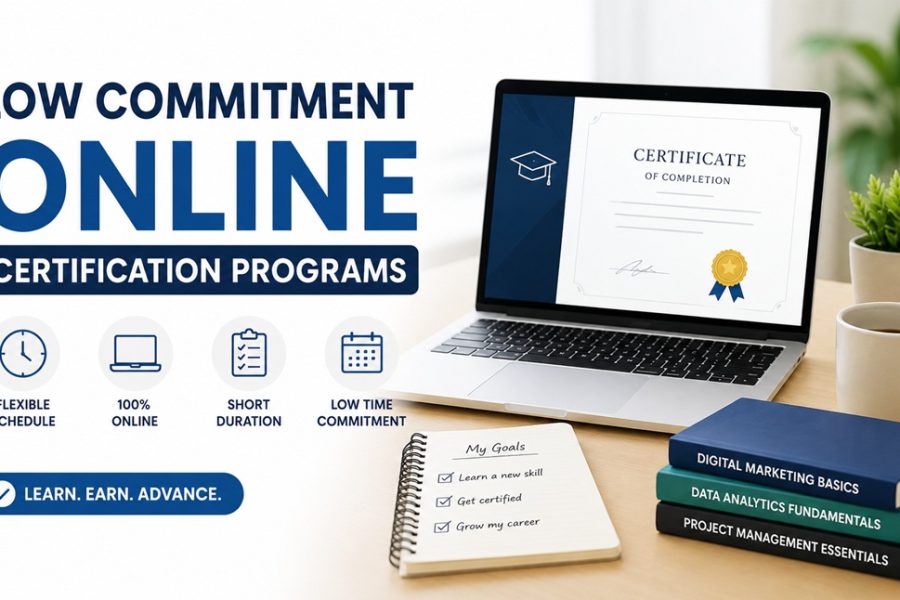
Micro-credentials and certificates are shorter and more focused. A Google Career Certificate takes about six months at 10 hours a week. Many are employer-recognised in the US, UK, Canada, and Australia.
Community college part-time enrolment is still one of the most affordable routes. In the US, you can take one or two online classes a semester for under $200 per credit at many schools.
Local Insight: What Parents Are Actually Using
In the US, many parents are using Google Career Certificates and community college programs backed by federal financial aid. In the UK, the Open University offers interest-free study loans specifically for part-time distance learners. In Canada, provincial funding through programs like the Canada Training Benefit provides up to $250 per year toward eligible courses. In Australia, TAFE Online offers short vocational courses that often qualify for government subsidies.
Four Questions to Ask Before Enrolling
Before signing up for anything, ask yourself:
- Can I complete this in sessions shorter than 30 minutes?
- Are there any fixed log-in times I cannot control?
- What happens if I miss a week — can I catch up without penalty?
- Is there financial support available for parents or part-time students?
If the program fails two or more of those, look elsewhere.
One Realistic Study Strategy
Early mornings work for many parents — 5:30am to 6:30am before the household wakes up. That is five hours a week. Over a year, that is 260 hours of focused study. Enough to complete a full certificate program and start a second one.
The goal is consistency over intensity. Thirty minutes every day beats three hours on a Sunday.



Leave a Comment